
Quick Answer
The nine most profitable products a non-technical builder can ship in 2026 are: mobile apps, dynamic web portals, micro-SaaS tools, browser extensions, WhatsApp bots, website AI chatbots, spreadsheet automations, CMS plugins, and custom dashboards. Service-style products (bots, dashboards, automations) pay fastest; product-style ones (micro-SaaS, plugins) compound slower but never stop.
The idea that you need a computer science degree to ship software is finished. AI coding engines now let creators, agencies and non-technical founders architect, build and deploy production-grade applications in days rather than quarters.
Which means the hard question has moved. It is no longer how do I build this — it is what is worth building. Software sells when it removes friction. Find a real operational bottleneck that costs someone hours or money every week, remove it, and monetisation stops being a mystery.
Below are nine products that reliably clear that bar, with the pain each one solves, how it actually makes money in India, and — the part most listicles skip — the first concrete step to take this week.
The Nine at a Glance
Not all nine suit the same person. This table is the fastest way to find yours.
| Product | Build effort | Time to first ₹ | Income model |
|---|---|---|---|
| 1. Mobile apps | High | 4–8 weeks | ₹10,000–₹1,00,000+ per project |
| 2. Dynamic web portals | Medium | 2–4 weeks | ₹10,000–₹30,000 per project |
| 3. Micro-SaaS utilities | Medium | 3–9 months | ₹99–₹199/user/month recurring |
| 4. Browser extensions | Low | 2–6 months | One-time or pro licence |
| 5. WhatsApp bots | Low | 1–2 weeks | Setup fee + monthly retainer |
| 6. Website AI chatbots | Low | 1–3 weeks | Setup fee + monthly retainer |
| 7. Sheets / Excel automations | Very low | 3–10 days | ₹5,000–₹50,000 per automation |
| 8. CMS plugins | Medium | 3–12 months | Marketplace licence sales |
| 9. Custom dashboards | High | 4–10 weeks | ₹50,000+ deployment or licence |
1. Custom Mobile Applications
The pain point: Growing businesses want an app to hold their community in one place, but conventional development quotes run into lakhs and take months to deliver.
The solution: Prompt-driven workflows now generate full-stack mobile apps complete with secure authentication, a cloud database, structured navigation and payment gateway integration — the same architecture agencies used to bill six figures for.
How it monetises: Charge small businesses a flat build fee, typically ₹10,000 to ₹1,00,000+ depending on scope. Or publish your own utility apps and earn from in-app purchases and ad revenue.
Start here: Pick one business you already know — a gym, a tuition centre, a salon — and rebuild the three things their customers do most often as a single-screen app. Show it to them before you finish it.
2. Dynamic Websites & Multi-Vendor Portals
The pain point: Retailers, warehouses and small factories want a digital storefront, but a system that juggles customers, delivery partners and inventory dashboards at once feels technically out of reach.
The solution: Clean, role-aware web architecture deployed end to end, where each user type sees only their own workflow.
How it monetises: Package high-performing dynamic sites for local business owners from ₹10,000 to ₹30,000. Three projects a month is a real service business — and it stacks naturally on top of website design work you may already be selling.
Start here: Build one portal for a business you can visit in person. Local proof closes far more deals than a polished online portfolio.

3. Targeted Micro-SaaS Utilities
The pain point: Professionals lose hours to repetitive micro-tasks — HR managers screening resumes by hand, founders generating invoices one by one, designers compressing assets, marketers checking keywords across five tabs.
The solution: A single-purpose web app that solves exactly one friction point, instantly, in a browser tab. No onboarding, no dashboard, no tutorial.
How it monetises: A low-friction subscription of ₹99 to ₹199 per month. With focused distribution in the communities where the pain lives, 100 committed users is roughly ₹15,000 in monthly recurring revenue — and recurring revenue is the only kind that compounds while you sleep.
Start here: Spend a week in one professional community — a subreddit, a WhatsApp group, a Discord — and write down every complaint that starts with "does anyone know a tool that…". Build the one that appears three times.
"The winning products are boring. Nobody brags about an invoice generator — they just pay for it every month and never cancel."
4. Browser Productivity Extensions
The pain point: Power users on LinkedIn, Gmail and Facebook burn hours every week on copy-pasting, tab-hopping and sending the same message for the fiftieth time.
The solution: A lightweight extension that lives inside the workflow, automating the routine part without making anyone switch windows.
How it monetises: The Chrome Web Store reaches billions of users and is far less saturated than the app stores. Charge a small one-time fee, or gate the power features behind a pro licence.
Start here: Watch someone do their job for an hour. The thing they do fifteen times without thinking is your extension.
5. Automated WhatsApp Business Bots
The pain point: Clinics, coaching institutes and restaurants drown in repetitive incoming messages — and the genuinely valuable enquiry gets buried under forty people asking about timings.
The solution: Always-on WhatsApp automation that answers the FAQs, books appointments, and surfaces the small percentage of messages that are actually ready to buy.
How it monetises: An upfront implementation fee plus a monthly maintenance retainer. This is one of the easiest sales in the Indian SMB market because the owner can feel the problem daily — we cover the mechanics in our business process automation work and in our guide to WhatsApp marketing in India.
Start here: Ask one local business owner to forward you a screenshot of yesterday's messages. Count how many were the same question. That number is your pitch.

6. Tailored Website AI Chatbots
The pain point: Generic chat widgets invent details or fall back on canned replies, which frustrates visitors and quietly damages trust in the brand.
The solution: A support assistant trained strictly on the company's own catalogue, documentation and pricing — so it either answers correctly or hands over to a human, and never improvises.
How it monetises: Sell an embeddable widget with a setup fee plus an ongoing retainer to keep the knowledge base current. That retainer is the real business: product ranges change constantly, and a stale bot is worse than none. See how we scope this in AI chatbot development, and what it costs in our chatbot pricing guide.
Start here: Take one business's PDF catalogue and turn it into a working bot in an afternoon. A live demo sells this product; a proposal does not.
7. Google Sheets & Excel Automations
The pain point: A huge share of Indian businesses genuinely run on spreadsheets, and staff lose hours every week to manual entry, reconciliation and stitching together reports.
The solution: Custom Apps Script automations and macros that handle complex calculations, sync data between sheets and systems, and generate formatted PDFs on a single click.
How it monetises: High-margin, low-competition service work. Businesses pay readily to get hours of manual labour back every week, and the build often takes a day or two.
Start here: This is the best first project on the list. Offer one free automation to a business you know, time how long it saves them per week, then use that number to price the next five.
8. Modular CMS Plugins (WordPress & Shopify)
The pain point: Site owners constantly hit the ceiling of their template, but commissioning a developer for one small feature is slow and disproportionately expensive.
The solution: Reusable, modular plugins that add a specific capability to platforms with enormous installed bases — WordPress alone still powers a large share of the web.
How it monetises: Publish on marketplaces such as CodeCanyon, or release a freemium version in the WordPress plugin repository and sell the pro licence. Slow to start, then genuinely passive.
Start here: Read the one-star reviews of the top three plugins in any category. Every recurring complaint is a feature someone is already willing to pay for.
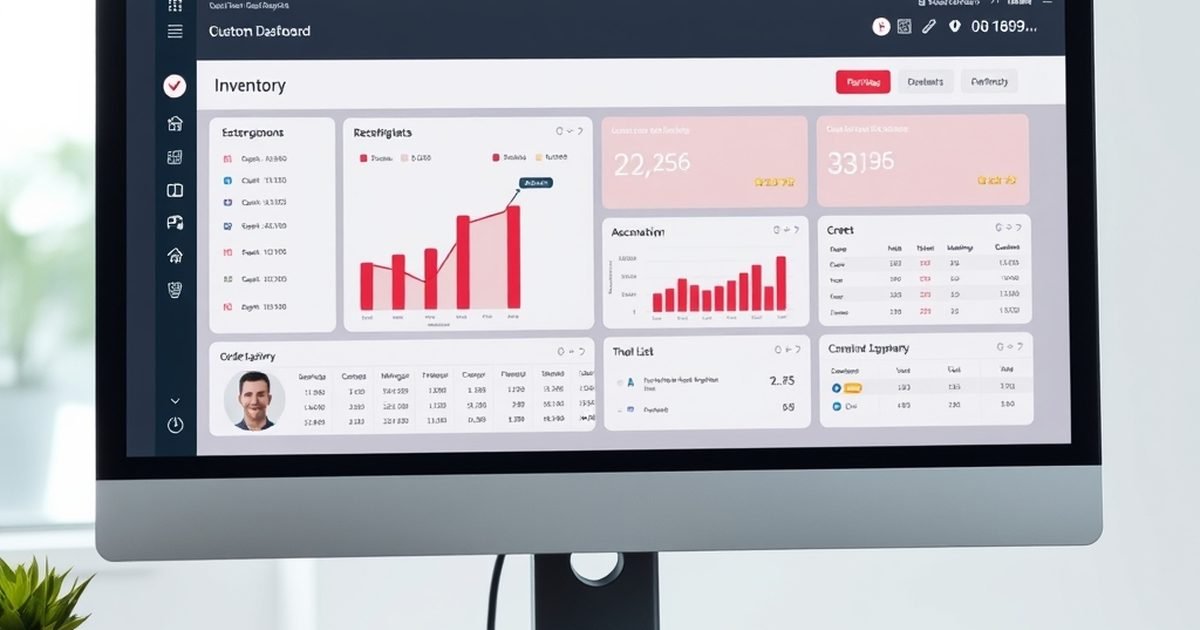
9. Custom Dashboards & Internal Billing Engines
The pain point: Off-the-shelf accounting and ERP software forces businesses into rigid moulds that clash with how they actually operate, so staff end up maintaining a parallel set of spreadsheets anyway.
The solution: Bespoke billing, inventory and order-tracking dashboards built around the business's real internal logic instead of a vendor's assumptions.
How it monetises: A premium one-time deployment fee or recurring licence. Retention is exceptional — once a business runs its daily operations on your system, replacing it is a project nobody wants. It pairs naturally with CRM setup; see also our guide to CRMs for small businesses in Odisha.
Start here: Find a business already running on spreadsheets. They have done your requirements analysis for you — the columns in their sheet are your database schema.
How to Choose Which One to Build
Three honest filters, in order:
- Which industry do you already understand? Domain knowledge beats technical skill here. If you have worked in logistics, build for logistics — you already know which problems are real and which are imaginary.
- Do you need cash this quarter, or an asset in two years? Cash now means automations, bots and portals. An asset means micro-SaaS or plugins. Trying to do both at once is how people finish neither.
- Can you reach twenty potential buyers this week without spending money? If not, pick a product whose buyers you can reach. Distribution, not the build, is what kills these projects.
Three Mistakes That Kill These Projects
- Building before talking to anyone. AI makes building so cheap that it is now easier to build the wrong thing than to find out what the right thing was. One conversation before you start saves a month.
- Underpricing because the build was fast. Clients pay for the problem removed, not the hours spent. A two-day automation that saves eight hours a week is not a two-day price — and cheap pricing reliably attracts the most demanding clients.
- Ignoring maintenance. Every product needs updates, backups and someone to answer emails. Price the retainer into the first proposal, or you will be doing free support forever.
Key Takeaway
- AI removed the coding barrier — product judgement is now the scarce skill, not syntax.
- Fastest to first payment: spreadsheet automations, WhatsApp bots, website chatbots.
- Best long-term compounding: micro-SaaS subscriptions and CMS plugins.
- Highest retention: custom dashboards and internal billing systems.
- Pick the industry you already know, then find the task someone repeats fifteen times a day.
Frequently Asked Questions
Can you really build and sell software without knowing how to code?
Yes, for a large and growing class of products. AI coding engines and no-code platforms produce working apps, portals, extensions and automations from plain-language instructions. What you still need is judgement — knowing which problem is worth solving, how to scope it, how to test it, and how to support a paying customer. The code is no longer the bottleneck; the product thinking is.
Which product should a beginner start with?
Google Sheets automations or a WhatsApp business bot. Both have short build times, an obvious buyer who already feels the pain, and a before-and-after you can demonstrate in one meeting. Micro-SaaS and plugins pay better over time but need an audience first — they are second projects, not first ones.
How much can you realistically earn from these in India?
Service-style products pay fastest: a dynamic website is ₹10,000–₹30,000, a WhatsApp bot ₹15,000–₹40,000 setup plus a retainer, a custom dashboard ₹50,000 upward. Product income compounds slower — a ₹149/month micro-SaaS needs about 100 paying users for ₹15,000 MRR, which usually takes 6–12 months of consistent distribution.
Do I need to register a company to sell software in India?
You can start as a sole proprietor with a current account and invoice immediately. GST registration becomes mandatory once turnover crosses your state's threshold, or earlier if you sell via certain marketplaces or to overseas customers. Speak to a CA before your first large invoice, not after it.
What usually goes wrong with AI-built software products?
Building before talking to a single buyer, so the product solves an imagined problem. Underpricing because the build was fast, which attracts the worst clients. And ignoring maintenance — every product needs updates, backups and support, and one without a support plan generates refunds instead of revenue.
How long does the first version take to build?
With AI assistance: a spreadsheet automation takes 1–3 days, a browser extension or micro-SaaS tool 1–2 weeks, a dynamic website 2–3 weeks, and a mobile app or custom dashboard 3–8 weeks. Scoping and customer conversations usually take longer than the build.
Want One of These Built For Your Business?
We build the bots, dashboards, automations and portals on this list for businesses across India — and we tell you honestly which one will actually move your numbers.
Book a Free Strategy CallRelated Reading
- AI Automation for Small Businesses in India — where automation pays back fastest.
- The Make.com Automation Guide for India — wiring tools together without code.
- How Much Does an AI Chatbot Cost in India? — pricing your bot projects.
- Website Design Cost in India — what to charge for portal and site work.